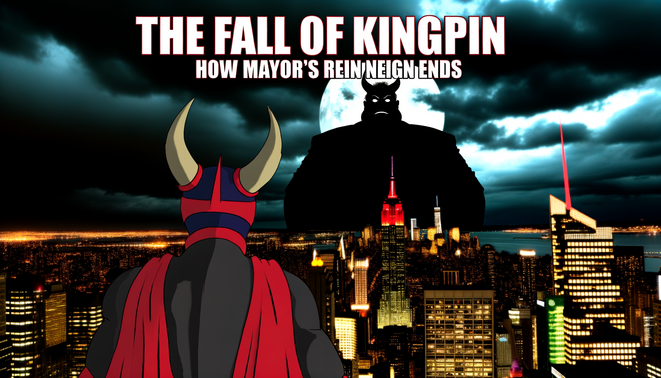
The Fall of Kingpin: How Daredevil: Born Again’s Mayor Fisk Story Ends in the Comics
The highly anticipated return of Matt Murdock and Wilson Fisk in Daredevil: Born Again has fans buzzing with excitement and speculation. Early glimpses and plot details suggest a fresh yet familiar take on their enduring rivalry, particularly with Fisk embracing his political power as the Mayor of New York City. The series premiere description paints a vivid picture of a city under his iron thumb, where Kingpin’s influence is pervasive, even down to illegal weapon shipments. In the season premiere, however, the cargo ship transporting those weapons sinks right in the East River after Daredevil comes aboard and Kingpin gives orders to scuttle the vessel. Additionally, the AVTF already seems like they’re out of control, given their harassment of vigilantes and ordinary citizens alike. It seems that the seeds of Fisk’s downfall have already been planted. Yet it’s worth taking a look at how this storyline played out in the comics to see whether Daredevil: Born Again might be heading in the same direction.
Wilson Fisk’s Ascent: From Crime Lord to NYC Mayor
Before diving into the dramatic conclusion, it’s crucial to understand how Wilson Fisk, the notorious Kingpin of Crime, managed to legally seize control of New York City. Following a period of intense instability and a power vacuum in the city’s criminal underworld, Fisk, ever the master strategist, saw an opportunity beyond the shadows. He ran for mayor on a populist platform, campaigning on a promise to bring law and order back to a city he argued was being torn apart by vigilantes and a failing justice system. His public image was meticulously crafted, presenting himself as a reformed businessman and a man of the people, despite his violent past being an open secret among those who truly knew him.
Fisk’s mayoral campaign was a testament to his intellect and manipulation. He exploited public fear and frustration, positioning himself as the only one capable of truly cleaning up New York. This political move wasn’t just about legitimacy; it was about power on an unprecedented scale. As mayor, Fisk gained control over the police department, city infrastructure, and various public services, effectively turning the entire city into his personal empire, disguised under the veneer of legality. His reign began with a chilling promise: he would rid New York of vigilantes, starting with Daredevil, the “Devil of Hell’s Kitchen.”
Daredevil’s Unrelenting Opposition
Matt Murdock, as Daredevil, found himself in an impossible position. He couldn’t simply beat Kingpin in a back alley anymore; his enemy was now protected by the law, the police, and the will of the people who had elected him. This storyline, predominantly explored in Chip Zdarsky’s acclaimed run on Daredevil, elevated their rivalry to new philosophical and moral heights. Daredevil’s fight against Mayor Fisk wasn’t just physical; it was a battle for the soul of the city, a struggle against a system corrupted from within.
Early in Fisk’s tenure, Daredevil was at a disadvantage. He was targeted by city resources, hunted by a police force under Kingpin’s direct command, and found his usual methods ineffective. This forced Matt to confront his own identity as Daredevil, leading to a period where he often operated without his costume, seeking to dismantle Fisk’s power structure from the ground up, rather than just punching his way through it. This era also saw Matt grappling with the consequences of his actions, including accidentally killing a petty thief, which deeply affected him and led to a temporary stint in prison, further complicating his ability to oppose Fisk.
The War on Vigilantes and New York’s Darkest Hour
Under Mayor Fisk, New York City became a police state. He established specialized anti-vigilante task forces, funded by the city, with the explicit mandate to hunt down and apprehend masked heroes. These forces, often aggressive and lacking oversight, mirrored the AVTF described in the Born Again premiere, harassing not just vigilantes but also ordinary citizens suspected of harboring or supporting them. The city’s atmosphere grew increasingly oppressive, with surveillance becoming commonplace and civil liberties eroding under the guise of public safety.
Kingpin’s reign wasn’t just about Daredevil; it was about asserting total control. He used his power to settle old scores, manipulate media narratives, and solidify his position, making it incredibly difficult for anyone to openly oppose him without risking everything. Other heroes, including Spider-Man and the Fantastic Four, were also affected by Fisk’s policies, though Daredevil remained his primary obsession. This era pushed the concept of heroism to its limits, forcing heroes to decide how far they were willing to go to protect a city that, at times, seemed to prefer its tyrannical mayor.
The Unraveling: How Mayor Kingpin’s Reign Ended in the Comics
The downfall of Mayor Kingpin was not a single event but a culmination of mounting pressures, both internal and external. It began with the slow erosion of his carefully constructed public image. While he initially enjoyed some public support, the increasing authoritarianism, the blatant corruption, and the suffering of the city under his rule began to turn the tide. Citizens grew weary of the constant surveillance, the aggressive policing, and the feeling that their city was being suffocated.
Key to his undoing was the persistent, multifaceted opposition from Daredevil and his allies. Even when Matt was imprisoned, others, including his allies like Foggy Nelson and Elektra (who even took up the Daredevil mantle for a time), continued the fight, exposing Fisk’s schemes and challenging his authority. The legal and political maneuvering by Matt and Foggy played a significant role in chipping away at Fisk’s legitimacy, revealing the cracks in his carefully constructed facade.
However, the most decisive blow came from within Kingpin’s own inner circle and the wider criminal underworld. His decision to marry Typhoid Mary, a character with a complex and often violent past, proved to be a critical misstep. This personal entanglement brought a new level of chaos and unpredictability to his reign. More importantly, Fisk’s continued efforts to consolidate power inadvertently created enemies among rival crime families and even some of his former associates who saw his mayoral position as an obstacle rather than an asset for their own operations.
The ultimate catalyst for his political demise was often rooted in the exposure of his undeniable criminal activities. Despite his mayoral shield, Fisk could never fully shed his identity as the Kingpin of Crime. Evidence of his ongoing corruption, his direct involvement in illegal activities, and his abuse of power eventually became too overwhelming for even his PR machine to contain. The pressure from Daredevil, combined with the collective efforts of the city’s heroes and a disillusioned populace, finally led to his resignation, rather than a dramatic public arrest or an electoral defeat.
Fisk’s resignation was a calculated move to retain some semblance of control and avoid a complete legal fallout. He didn’t just walk away; he plotted his next move, often seeking to regain power through other means or to manipulate events from behind the scenes. His time as mayor ended not with a bang, but with a strategic retreat, allowing him to resurface later, still a formidable threat, but no longer wielding the official power of the mayor’s office.
Daredevil: Born Again: Echoes and Divergences
The description of Daredevil: Born Again provides intriguing parallels and potential divergences from the comic book storyline. The sinking cargo ship filled with weapons, a direct order from Kingpin to scuttle it after Daredevil’s intervention, immediately sets a more aggressive tone for his mayoralty than perhaps initially depicted in the comics. This act of blatant disregard for public safety and the environment, for the sake of concealing his criminal enterprise, could be a much faster catalyst for public disillusionment and legal repercussions than a slow burn.
The out-of-control AVTF further aligns with the comics’ depiction of Fisk’s oppressive regime. However, the show might accelerate their brutality and visibility, making Kingpin’s tyranny undeniable to the general public much sooner. This quick escalation could mean a compressed timeline for his downfall, or it could provide Daredevil with more immediate and tangible evidence to present against the mayor.
While the comics depicted a more drawn-out political battle, the MCU’s version, especially with the explicit act of scuttling a ship, might lean towards a more direct confrontation that exposes Fisk’s criminal nature earlier. This could lead to a scenario where public opinion turns against him more rapidly, forcing his hand or leading to a more public and definitive end to his mayoral term, perhaps even an impeachment or a more forceful removal from office by the very institutions he sought to control.
The Enduring Legacy of Mayor Kingpin
The “Mayor Kingpin” storyline in the comics is a modern classic, offering a profound exploration of power, corruption, and the blurred lines between justice and law. It challenged Daredevil in ways no street-level thug ever could, forcing him to evolve and adapt. Wilson Fisk’s time as mayor cemented his status not just as a physical threat but as a formidable intellectual and political adversary. His actions left an indelible mark on New York City and its heroes, reminding them that sometimes, the greatest threats don’t wear masks but tailored suits.
As Daredevil: Born Again unfolds, fans will undoubtedly be drawing comparisons, eager to see which elements of the iconic comic arc are faithfully adapted and where the MCU chooses to forge its own path. Regardless of the exact ending, one thing is certain: Wilson Fisk’s mayoral reign will be a defining chapter in the saga of Daredevil, and its conclusion will undoubtedly reshape the future of Hell’s Kitchen and beyond.


