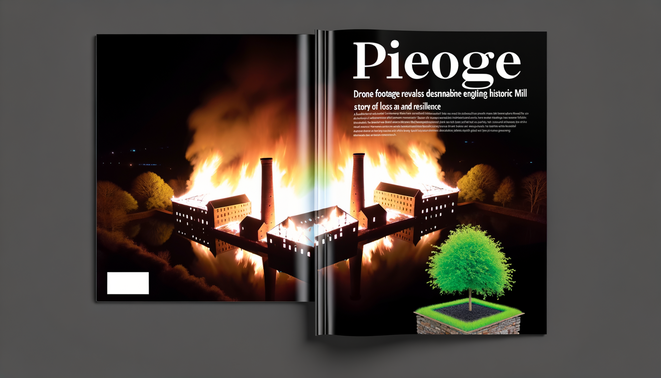
Drone Footage Reveals Devastating Blaze Engulfing Historic Mill: A Story of Loss and Resilience
In an age where technology often brings us closer to global events, few things capture the raw, unbridled power of nature and disaster quite like aerial footage. Recently, the world watched in sorrow as breathtaking yet heartbreaking drone footage emerged, showcasing a colossal fire ripping through an irreplaceable historic mill. This isn’t just a story about a building burning; it’s a poignant narrative of industrial heritage, community memory, and the dramatic, often unseen, battle against destruction. For beginners and intermediate readers alike, understanding the scope of such an event, the historical significance lost, and the vital role of modern technology in documenting it, offers crucial insights into both tragedy and the enduring human spirit.
The Drone’s Eye View: A Scene of Devastation Unfolds
The moment the drone ascended, a grim reality unfurled below. From hundreds of feet above, the sheer scale of the inferno became terrifyingly clear. What once stood as a proud testament to craftsmanship and industry was now a roaring furnace, devouring timber, brick, and iron with relentless fury. The drone’s camera, steady amidst the rising plumes of smoke, provided an unprecedented, bird’s-eye perspective that ground-level cameras simply couldn’t achieve. We saw the flames leap from windows, engulfing roofs, and sending showers of sparks into the night sky. The heat distorted the air, creating shimmering waves visible even from a distance, while the sound of crackling wood and collapsing structures echoed eerily through the drone’s microphones. This aerial view wasn’t just a spectacle; it was a critical tool, offering firefighters a dynamic map of the blaze’s progression, identifying hotspots, and revealing vulnerable points in the historic structure that were otherwise obscured by smoke and danger. The images are a stark reminder of the destructive power of fire when it takes hold of a large, complex building, particularly one constructed with materials that readily fuel such an inferno. The footage became a viral sensation, not for entertainment, but as a sombre testament to a monumental loss.
A Mill’s Storied Past: What We Lost Beyond the Flames
Every historic mill tells a story, and the one consumed by this devastating blaze was no exception. These structures are more than just old buildings; they are tangible links to our past, monuments to innovation, labor, and community development. This particular mill, often a local landmark, likely played a pivotal role in the region’s economic and social fabric for generations. Perhaps it was a textile mill, churning out fabrics that clothed a nation, or a grain mill, grinding flour that fed countless families. Its thick stone walls, massive timber beams, and intricate machinery were not merely architectural features but echoes of an era defined by steam power, ingenuity, and the industrious spirit. Generations of workers passed through its doors, their lives intertwined with its rhythmic hum and the clatter of its operations. The loss of such a structure isn’t just an architectural setback; it’s a profound cultural tragedy. It eradicates a physical representation of history, a place where schoolchildren learned about local heritage, where artists found inspiration, and where residents felt a sense of continuity with their ancestors. The fire didn’t just burn down a building; it incinerated a chapter of collective memory, leaving behind only the painful questions of what might have been preserved and what can now only be remembered.
Drones in Disaster: More Than Just Captivating Footage
While the visual drama of the drone footage captivated global audiences, its utility extended far beyond mere spectacle. In modern disaster management, Unmanned Aerial Vehicles (UAVs) have become indispensable tools. During the height of the historic mill fire, drones offered firefighters crucial, real-time intelligence that human personnel could not safely acquire. They could safely hover over the inferno, providing thermal imaging to detect hidden hot spots within the structure, guiding water application to the most effective areas, and mapping the spread of the fire across the sprawling complex. This aerial perspective allowed incident commanders to strategize more effectively, allocate resources efficiently, and ensure the safety of ground crews by identifying areas of potential collapse. Beyond firefighting, drones play critical roles in post-disaster assessment. They can quickly survey damaged areas, assess structural integrity, and aid in search and rescue operations, all without exposing human responders to unnecessary risks. The speed and precision with which drones can collect data make them invaluable for insurance claims, damage assessment reports, and ultimately, for planning recovery and rebuilding efforts. This incident clearly demonstrates how drones are transforming emergency response, turning a potentially chaotic scene into one where informed decisions can be made rapidly, ultimately mitigating further loss and protecting lives.
Challenges of Heritage Firefighting and the Imperative of Preservation
Fighting a fire in a historic structure like an old mill presents a unique set of formidable challenges. Unlike modern buildings designed with fire-retardant materials and sophisticated suppression systems, many historic mills predate such innovations. They often feature large open spaces, timber construction, concealed voids that allow fire to spread undetected, and a lack of modern fire breaks. The sheer volume of combustible materials – old wood, textiles, sometimes even machinery lubricants – acts as potent fuel. Furthermore, the structural integrity of older buildings can be unpredictable under extreme heat, posing immense risks to firefighters. The focus shifts from merely extinguishing the blaze to a delicate balance of protecting human lives, containing the fire, and salvaging what remains of historical significance. This tragedy underscores the critical importance of heritage preservation and proactive fire safety measures for historic sites. Investing in modern fire detection and suppression systems, regular safety audits, and educating communities about the value and vulnerability of their heritage assets are not just good practices; they are essential. The loss of this mill is a stark reminder that once these irreplaceable connections to our past are gone, they are gone forever, leaving a void that no amount of modern reconstruction can truly fill.
The Aftermath and the Path Forward: Rebuilding and Remembering
As the last embers glow and the smoke slowly clears, the full extent of the devastation becomes tragically apparent. The historic mill, once a vibrant hub, now stands as a skeletal ruin, a monument to what was lost. The aftermath of such a fire is a complex period for any community. Investigations will commence to determine the cause, a crucial step not only for accountability but also for preventing future tragedies. The community response, however, often transcends the immediate practicalities. There’s a collective grief for the loss of a landmark, a shared memory, and a piece of local identity. Debates will inevitably arise about the future: Is rebuilding possible? Should it be rebuilt as a replica, or should the site be re-imagined? Regardless of the path chosen, the incident serves as a powerful catalyst for reflection on the importance of cultural heritage. It often galvanizes efforts to protect other historic sites, sparking renewed interest in local history and the vulnerability of our shared past. The drone footage, initially a testament to destruction, can paradoxically become a tool for advocacy, a visual argument for stronger preservation policies and greater vigilance in safeguarding the irreplaceable legacies that define us.
Conclusion: A Call for Vigilance and the Value of Our Heritage
The drone footage of the historic mill fire is more than just a captivating visual; it’s a profound reminder of the fragility of our built heritage and the relentless power of disaster. It highlights the critical role of technology in documenting, assessing, and responding to such events. But perhaps most importantly, it compels us to look at the historic buildings around us not just as old structures, but as living repositories of history, culture, and community spirit. Their protection is a shared responsibility, a continuous act of vigilance that ensures future generations can still connect with the stories and ingenuity of those who came before us. Let this tragic event be a renewed call to action: to appreciate, protect, and actively preserve the invaluable landmarks that define our past and enrich our present.


