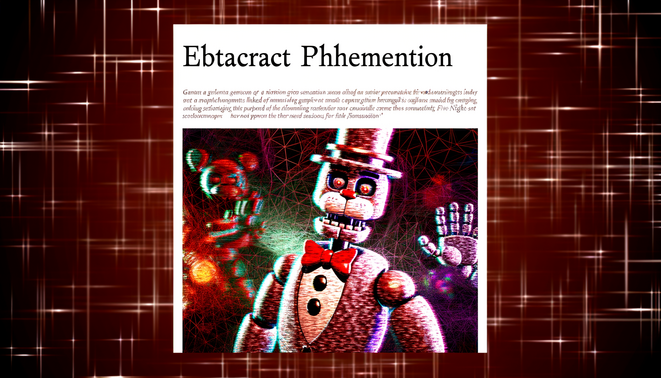
In the vast, often bewildering landscape of the internet, things can go from obscure to “viral” in the blink of an eye. Or can they? Lately, whispers and headlines have been circulating about a game purportedly named “Five Nights At Epstein’s.” The claims are bold: it’s a ‘viral’ video game, apparently ‘sweeping the country,’ drawing parallels to the legitimate, record-breaking success of the indie horror sensation, Five Nights At Freddy’s. But when something sounds this sensational, especially involving such a controversial and disturbing figure, it begs a crucial question: Is it truly viral, or is the narrative a product of hype, misunderstanding, or perhaps even deliberate exaggeration? For beginners and intermediate readers navigating the digital world, distinguishing genuine trends from fleeting fads, or even outright misinformation, is more important than ever. In this deep dive, we’ll move beyond the sensational headlines and delve into the data, search trends, and social media chatter to paint a clearer, more complex picture of “Five Nights At Epstein’s” and its supposed meteoric rise.
Understanding “Five Nights At Freddy’s” – A Benchmark for Virality
Before we dissect the claims surrounding an “Epstein” version, it’s vital to understand what genuine virality looks like in the gaming world, exemplified by its inspiration: Five Nights At Freddy’s (FNAF). Launched in 2014 by Scott Cawthon, FNAF wasn’t just a game; it was a cultural phenomenon. Its unique blend of jump scares, deep lore, unsettling animatronics, and simple yet terrifying gameplay resonated with millions. What made FNAF truly viral? A combination of factors:
- Massive YouTube & Twitch Coverage: Major content creators played it, generating millions of views and screams, driving immense curiosity.
- Fan Theories & Lore Debates: The game’s cryptic story sparked countless theories, fan art, animations, and discussions across forums and social media.
- Accessibility: Relatively simple mechanics made it easy for anyone to pick up, yet hard to master.
- Merchandising & Sequels: Its success quickly led to numerous sequels, spin-offs, books, and even a major motion picture, cementing its place in pop culture.
FNAF’s virality was measurable, visible, and sustained, translating into mainstream recognition and significant commercial success. It created a global community and an enduring legacy. This level of impact sets a high bar for any game claiming similar “viral” status.
The Emergence of Parodies and Shock Value
The internet thrives on parody, satire, and often, shock value. It was almost inevitable that a game as iconic and meme-worthy as Five Nights At Freddy’s would spawn countless fan-made variations. Some are affectionate tributes, others are comedic spoofs, and a segment leans into controversy for attention. The idea of “Five Nights At Epstein’s” clearly falls into the latter category. Leveraging the notoriety of Jeffrey Epstein – a figure synonymous with unspeakable crimes and high-profile scandal – instantly creates a provocative and disturbing premise. Such titles aim to shock, to grab headlines, and to exploit public fascination with the macabre and forbidden. This approach often generates a flurry of initial interest, especially within certain online communities drawn to dark humor or transgressive content. The very mention of such a concept can elicit strong reactions, prompting shares and discussions, which can be mistaken for widespread virality. However, the critical question is whether this initial ripple effect translates into genuine, sustained, and broad-based engagement comparable to the original FNAF, or if it remains confined to specific echo chambers.
Data Deep Dive – Is “Five Nights At Epstein’s” Truly Viral?
Let’s move beyond the hearsay and look at what the data tells us. The idea of “sweeping the country” implies broad, measurable interest. Here’s what various indicators suggest:
Google Search Trends:
A comparison using tools like Google Trends provides immediate insight. When you pit “Five Nights At Epstein’s” against “Five Nights At Freddy’s,” the results are stark. Search interest for the original FNAF remains consistently high, with numerous peaks coinciding with new game releases, movie announcements, or major content creator events. In contrast, “Five Nights At Epstein’s” barely registers on a national or global scale. While there might be localized, very minor spikes, these are often negligible when compared to established viral phenomena. It suggests that while some individuals or niche groups might be searching for it, it has not captured the collective consciousness of the general public.
Social Media Mentions & Engagement:
Examining platforms like X (formerly Twitter), YouTube, and TikTok for mentions, hashtags, and engagement around “Five Nights At Epstein’s” reveals a similar pattern. While you can find discussions, often in the form of memes, sarcastic comments, or dark humor, they are typically isolated and do not demonstrate the explosive, widespread uptake seen with genuine viral content. There isn’t an equivalent surge of millions of unique gameplay videos, dedicated fan art communities, or widespread meme formats that permeate mainstream internet culture. The discussions tend to be confined to specific subcultures or threads rather than breaking out into general public discourse. Furthermore, much of the discussion might be about the concept of the game, or the claim of its virality, rather than actual engagement with the game itself.
Gaming News & Mainstream Media Coverage:
A truly viral game, especially one with a controversial premise, would inevitably attract significant attention from both major gaming news outlets (e.g., IGN, Polygon, Kotaku) and potentially even mainstream news organizations (given the Epstein connection). A quick scan of reputable gaming news sites reveals a conspicuous absence of extensive coverage about “Five Nights At Epstein’s” as a “sweeping the nation” phenomenon. If it were genuinely viral, generating widespread public interest, it would be a major news story. The lack of such coverage further supports the idea that its “virality” is, at best, a highly localized or exaggerated claim.
Download/Play Statistics (Implicit):
While precise download numbers for such a fan-made or unofficial game are often impossible to obtain, the lack of broader digital footprint (search, social, media) implicitly suggests that its player base, if it exists, is incredibly small. It’s highly unlikely that a game “sweeping the country” would not leave a more substantial, trackable digital trail.
The “Viral” Misconception and Echo Chambers
So, if the data doesn’t support widespread virality, why do some believe “Five Nights At Epstein’s” is sweeping the nation? The answer often lies in the nature of online information consumption and the phenomenon of echo chambers. Online algorithms are designed to show users more of what they interact with, reinforcing existing beliefs and interests. If an individual is part of a community that discusses dark humor, controversial topics, or specific niche gaming content, they might frequently encounter mentions of “Five Nights At Epstein’s.” Within that specific echo chamber, it can feel incredibly popular and widespread because their immediate digital environment is saturated with it. However, this localized prevalence doesn’t reflect broader public interest. What seems “viral” to a niche group can be utterly unknown to the vast majority. This perception is further amplified by headlines or social media posts that sensationalize nascent trends, mistakenly extrapolating limited engagement into a national phenomenon. It’s a classic case of confusing a ripple in a pond with a tidal wave across an ocean.
The Impact of Unverified Claims and Misinformation
The rapid spread of unverified claims, especially regarding sensitive or controversial topics, carries significant implications. When a game with such a disturbing premise is falsely labeled as “viral” or “sweeping the country,” several negative consequences can arise:
- Distraction and Misdirection: It can divert attention from genuine issues or more pressing concerns, creating noise in the information ecosystem.
- Normalization of Disturbing Content: Falsely elevating the status of such content, even unintentionally, risks normalizing or trivializing the serious nature of the subject matter it references.
- Erosion of Trust: When the public is repeatedly exposed to sensational but unsubstantiated claims, it exposes a gap in critical thinking skills, making it harder to discern truth from fiction.
- Fueling Moral Panics: Unverified “viral” claims about disturbing content can inadvertently fuel moral panics, leading to exaggerated fears or misplaced public outrage.
For readers, it highlights the critical importance of developing media literacy skills – questioning sensational headlines, seeking corroborating evidence, and understanding the mechanisms by which information spreads (or appears to spread) online.
Conclusion – A Complex Story, Not a Simple Sweep
Having peeled back the layers of sensationalism and delved into the available data, the story of “Five Nights At Epstein’s” is far more complex and nuanced than the narrative of a game “sweeping the country.” While it undoubtedly exists as a fan-made creation, likely within specific online communities, and has garnered some attention due to its provocative nature, the evidence overwhelmingly indicates it has not achieved anything close to the widespread, mainstream virality of its inspiration, Five Nights At Freddy’s. Search trends are minimal, social media engagement is confined, and major media outlets have not reported on it as a national phenomenon. What we likely see here is a potent combination of niche interest, algorithmic amplification within specific online groups, and a misunderstanding of what constitutes true “virality.”
Key Takeaway: Questioning the Viral Narrative
In an age where information travels at light speed, and headlines compete for attention, it’s crucial for every internet user – from beginners to seasoned veterans – to approach claims of “virality” with a healthy dose of skepticism. The data, more often than not, tells a more accurate and less dramatic story. Before sharing, before reacting, and before believing, take a moment to ask: What’s the evidence? Is this genuinely widespread, or am I seeing it because of my specific online bubble? By doing so, we become more informed, more discerning, and ultimately, better equipped to navigate the intricate and sometimes misleading currents of the digital world. The case of “Five Nights At Epstein’s” serves as a powerful reminder: not everything that generates buzz in a corner of the internet is truly “sweeping the country.”


