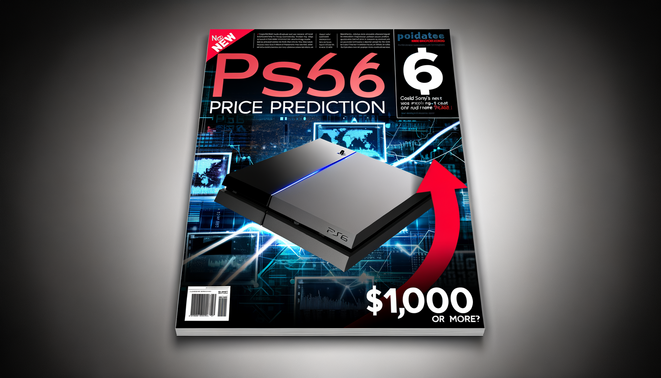
As the gaming world buzzes with anticipation for the next generation of console innovation, all eyes are turning to the potential successor to Sony’s powerhouse PlayStation 5. While the PlayStation 6 remains firmly in the realm of speculation, early whispers and expert analyses are beginning to paint a vivid picture of what we might expect – and the predicted price tag is already sending shockwaves through the community. Could the PS6 truly launch with a price point of $1,000 or even more, redefining the console market as we know it?
The $1,000 Question: Why Such a Premium Price Tag?
The prospect of a thousand-dollar console might seem astronomical to many, but several powerful factors could converge to push the PS6’s price into this unprecedented premium territory. Understanding these elements is crucial for any gamer, from casual enthusiasts to dedicated professionals, looking to plan their next-gen investment and understand the evolving landscape of interactive entertainment.
Bleeding-Edge Technology & Soaring Component Costs
Each new console generation strives to push the boundaries of technological capability, and the PS6 will undoubtedly be at the forefront of this evolution. We can anticipate significant, even revolutionary, advancements in areas like GPU and CPU performance, potentially leveraging cutting-edge architectures, advanced fabrication processes, and even custom-designed chips. These next-gen components – including state-of-the-art memory solutions, incredibly fast custom solid-state drives (SSDs) perhaps leveraging PCIe 5.0 or beyond, and sophisticated cooling systems – come with increasingly hefty price tags. Developing and integrating these bespoke parts requires substantial research and development investment from Sony, costs that are ultimately, at least in part, passed on to the consumer.
Global Economic Headwinds & Persistent Inflation
The global economy has seen considerable shifts in recent years, with inflation impacting nearly every sector, from raw materials and energy to manufacturing labor and shipping costs. The supply chain issues that significantly impacted the PlayStation 5’s launch have also highlighted the inherent vulnerabilities in the global electronics manufacturing and distribution networks. Should these inflationary trends persist or even worsen closer to the PS6’s release window, the expenses associated with manufacturing, assembling, and distributing the console will inevitably climb, further contributing to a higher retail price point.
Intensive Research & Development (R&D) Investment
Bringing a new, groundbreaking console to market isn’t just about assembling high-end parts; it involves years of intensive, multi-billion-dollar R&D. Sony invests heavily into creating proprietary technologies, designing intuitive user interfaces, developing new operating systems, and ensuring crucial features like backward compatibility (a feature gamers increasingly demand and value). These enormous upfront investments in innovation and engineering need to be recouped over the console’s lifecycle, and a higher launch price is often one of the primary strategies to achieve that, especially if initial production runs are limited or complex.
A Look Back: Console Pricing Trends Through History
Reviewing the launch prices of previous consoles can offer some valuable context, though it’s vital to remember that each generation faces a unique confluence of economic and technological realities.
- PlayStation 3 (PS3): Launched in November 2006 at a then-controversial price of $499 (for the 20GB model) and $599 (for the 60GB model). This was widely considered a very high entry barrier at the time and significantly impacted initial sales. Sony eventually made considerable price adjustments.
- PlayStation 5 (PS5): Launched in November 2020 at $499 for the standard model with a disc drive and $399 for the Digital Edition. Despite initial widespread supply issues and rampant scalping, this pricing was generally considered competitive, especially given its raw performance capabilities and the prevailing economic conditions of the time.
The PS6 operating at a starting price of $1,000 would represent a monumental leap, signaling Sony’s unwavering confidence in its technology, brand prestige, and the perceived value proposition, but also potentially narrowing its immediate market reach considerably.
Breaking News: Leaks Hint at a $699.99 Possibility!
While the initial $1,000+ prediction has been a dominant and somewhat alarming talking point, recent unverified leaks and industry whispers suggest that Sony might be actively exploring or aiming for a more “palatable” price point. According to unconfirmed reports that began circulating in late March 2026, a price of $699.99 is still within the realm of possibility for the PlayStation 6. These leaks, while inherently speculative and unverified, offer a significant ray of hope for gamers who are deeply concerned about the escalating costs of next-gen hardware and the potential for the console to become unaffordable for many.
It’s absolutely crucial to approach such leaks with a healthy dose of skepticism and caution. Console pricing is an incredibly complex and strategic dance, influenced by a multitude of factors: precise manufacturing costs, long-term market strategy, intense competitor analysis (from Xbox to high-end PC gaming), and projected sales volumes. Sony will undoubtedly be weighing the critical desire for broad market penetration against the equally vital need for healthy profitability. A $699.99 price point would still represent a substantial investment for most households but would make the console significantly more accessible than a four-figure sum, potentially widening its appeal dramatically.
What Features Would Justify a $1,000+ PS6?
If Sony were to indeed push the PS6 into the ultra-premium, four-figure price bracket, it would almost certainly be accompanied by groundbreaking features and an unparalleled, truly next-level gaming experience that makes a compelling case for such an investment. Here’s a deeper dive into what we might expect:
- Native 8K Gaming at High Refresh Rates & Unprecedented Ray Tracing: While the PS5 offers some 8K output and introduces ray tracing, the PS6 could deliver native 8K resolution gaming at consistently high frame rates (e.g., 60fps or even 120fps), alongside vastly improved, hyper-realistic ray tracing capabilities that are virtually indistinguishable from real life, extending to global illumination and complex reflections.
- Revolutionary AI Upscaling & Rendering Technologies: Beyond traditional upscaling, the PS6 might feature dedicated AI hardware (similar to Nvidia’s DLSS or AMD’s FSR but integrated at a deeper hardware level) for next-level image reconstruction and upscaling. This could make lower-resolution games look stunning on 8K displays with minimal performance impact, or push higher resolutions with greater efficiency.
- Next-Generation Haptic Feedback & Hyper-Adaptive Triggers: Building exponentially on the DualSense’s groundbreaking innovations, the PS6 controller could offer even more nuanced, granular, and immersive haptic feedback, combined with even more sophisticated adaptive triggers that dynamically adapt to an unprecedented degree of in-game actions, textures, and resistance levels.
- Deeply Integrated VR/AR Capabilities & Bundled Hardware: The line between console gaming and virtual/augmented reality is increasingly blurring. The PS6 might feature deeply integrated, perhaps even bundled or seamlessly compatible, next-gen VR hardware that sets an entirely new standard for immersive, photorealistic virtual experiences, moving beyond current PS VR2 capabilities.
- Massive, Ultra-Fast, and Expandable Custom SSD: An even larger (e.g., 4TB+), incredibly faster custom SSD than the PS5’s, leveraging cutting-edge NVMe 2.0 or proprietary technologies. This would virtually eliminate loading screens entirely, allow for entirely new ways game worlds are designed and streamed, and enable instant asset streaming.
- Unrivaled Exclusive Game Lineup: A premium console often comes with the promise of unparalleled exclusive titles that showcase its full power. Sony would likely invest heavily in first-party studios to develop generation-defining games that are only possible on the PS6, making the console a must-have for those experiences.
- Sustainable Design & Premium Materials: A higher price point could also reflect a significant commitment to environmentally friendly manufacturing processes, the use of advanced recycled materials, and highly energy-efficient operation, appealing to a growing segment of conscious consumers.
The Impact on Consumers and the Evolving Gaming Landscape
A PS6 priced at $1,000 or more would undoubtedly segment the market in significant ways. While early adopters, affluent gamers, and dedicated PlayStation fans with substantial disposable income might readily embrace such a premium device, it could undeniably alienate a significant portion of the casual gaming audience and even many long-time enthusiasts. This scenario could lead to several shifts:
- Increased Demand for Flexible Financing Options: Sony might need to partner extensively with retailers and financial institutions to offer attractive payment plans, subscription models, or “console as a service” options to make the console more accessible over time.
- Extended Upgrade Cycles: Many gamers might choose to hold onto their PlayStation 5s for considerably longer, waiting for potential price drops, special bundles, or a compelling reason to upgrade that goes beyond initial launch offerings.
- A Boost for PC Gaming: A significantly higher console price could potentially drive more gamers towards the PC platform, where hardware prices are also high but offer greater flexibility, upgradeability, and often a longer lifespan for individual components. Cloud gaming services could also see a surge in popularity.
- Enhanced Importance of Subscription Services: PlayStation Plus and similar gaming subscription services might become even more crucial, offering ongoing value, access to extensive game libraries, and making the initial hardware investment feel more justified over the long term.
- Shift in Game Development: Developers might increasingly target lower-spec versions or cloud streaming for wider audiences, reserving the PS6’s full power for truly high-fidelity, niche experiences.
The Road Ahead: Balancing Speculation with Reality
Ultimately, all these discussions remain firmly within the realm of speculation and informed prediction. Until Sony officially unveils the PlayStation 6, details its technical specifications, and announces its definitive pricing strategy, everything is subject to significant change. The company will be meticulously monitoring global market conditions, anticipating technological breakthroughs, analyzing competitor moves (from Microsoft’s Xbox initiatives to the growing influence of cloud gaming and PC hardware advancements), all to determine the optimal sweet spot between groundbreaking innovation, sustained profitability, and broad consumer accessibility.
Whether the PlayStation 6 ultimately lands at an eyebrow-raising $1,000+, a potentially more accessible $699.99, or somewhere entirely new, one thing remains undeniably certain: the next generation of PlayStation promises to be a powerful, transformative, and hotly debated force in the thrilling world of interactive entertainment.
This article was updated by Andrea Trama on March 30, 2026, with reference to leaks claiming that a price of $699.99 is still possible for the PS6. It was first published on March 28.


