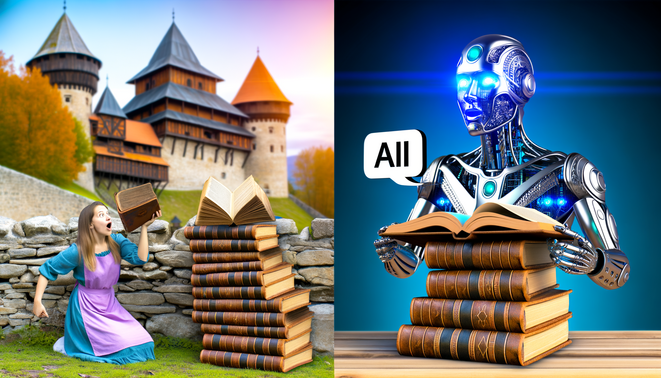
Kingdom Come: Deliverance 2 Developer Claims AI is Replacing Them in Localization: A Deep Dive into a Growing Controversy
The gaming world is perpetually buzzing with new releases, groundbreaking technologies, and sometimes, unexpected controversies. Recently, a revelation concerning the highly anticipated Kingdom Come: Deliverance 2 has ignited a fervent debate across the industry. A former developer from Warhorse Studios, the acclaimed studio behind the historically accurate RPG, has made a significant claim: that artificial intelligence (AI) will handle all localization for the upcoming sequel. This statement arrives at a time when the implementation of generative AI in games is already facing considerable backlash, raising questions about artistic integrity, job security, and the very soul of game development.
For fans of the original Kingdom Come: Deliverance, this news is particularly poignant. The first game was celebrated for its painstaking historical accuracy, intricate narrative, and deep immersion into 15th-century Bohemia. Every detail, from the combat mechanics to the spoken dialogue, contributed to an experience that felt both authentic and profoundly human. Localization, in such a narrative-rich and historically nuanced title, is not merely about translating words; it’s about preserving the tone, humor, cultural context, and emotional resonance for a global audience. The prospect of AI stepping into this crucial role for the sequel warrants a closer look at its potential implications.
Kingdom Come: Deliverance – A Legacy of Authenticity
Before diving into the AI debate, it’s essential to understand why Kingdom Come: Deliverance holds such a special place in the hearts of many gamers. Released in 2018, the game stood out in a market dominated by high-fantasy RPGs by offering a grounded, realistic medieval experience. Players took on the role of Henry, a blacksmith’s son thrust into a civil war, navigating a world devoid of magic but rich in historical detail and complex characters. The game’s reliance on historical sources for its architecture, clothing, combat, and even dialogue made its immersive quality unparalleled. This commitment to authenticity extended to its narrative and character interactions, where every conversation felt weighty and believable. For a game so deeply rooted in a specific time and culture, the nuances of its presentation, including its localization, were paramount to conveying its unique identity.
The Inevitable March of AI in Gaming
Artificial intelligence is not a new concept in video games; it has long been used for non-player character (NPC) behavior, pathfinding, and even procedural content generation. However, the recent advancements in generative AI have introduced a new paradigm, pushing AI beyond mere utility into creative domains. Developers are exploring AI for everything from generating dialogue and character models to creating textures and even entire game levels. The allure is clear: AI promises increased efficiency, reduced development costs, and potentially faster production cycles. In a highly competitive industry where budgets and timelines are constantly scrutinized, these benefits are attractive.
Yet, with these promises come significant concerns. The rapid integration of generative AI has sparked fears of widespread job displacement, particularly for artists, writers, and voice actors. Beyond the economic impact, there’s a growing debate about the ethical implications of using AI to create content, including questions about originality, copyright, and the very essence of human creativity. Localization, a field that blends linguistic expertise with cultural understanding and creative flair, naturally becomes a prime target for AI’s disruptive potential.
Unpacking Game Localization: More Than Just Translation
To truly appreciate the magnitude of Warhorse Studios’ alleged decision, one must understand what game localization entails. It’s far more intricate than simply translating text from one language to another. Effective localization is a multifaceted process that adapts a game to suit the cultural, linguistic, and often legal requirements of various target markets. Key components include:
- Text Translation: This covers everything from dialogue and UI elements to quest descriptions and in-game lore. A good translation maintains the original meaning, tone, and style.
- Voice Acting: For many games, voiceovers are crucial for immersion. Localization involves casting talented voice actors who can convey emotion and personality in the target language.
- Cultural Adaptation: This is where true expertise shines. It involves modifying humor, references, metaphors, names, and even imagery to resonate with a local audience without losing the original intent. Sometimes, direct translation can lead to awkwardness or even offense if cultural nuances are missed.
- Technical Adaptation: Ensuring the game’s text fits UI elements, handling different character sets, and adapting date/time formats.
For a game like Kingdom Come: Deliverance, steeped in historical and regional particularities, the human touch in localization is critical. The subtle inflections of a regional accent, the specific vocabulary of a medieval peasant, or a historically accurate idiom—these are elements that human localization specialists, often historians or cultural experts themselves, meticulously craft to preserve the game’s authenticity. A machine, no matter how advanced, struggles with the intuitive understanding of cultural context, subtle humor, and the emotional weight behind specific phrases.
The Warhorse Studios AI Localization Claim: What It Means
The former Warhorse Studios developer’s statement that “all localization” for Kingdom Come: Deliverance 2 will be handled by AI is a significant claim that, if true, marks a substantial shift in the studio’s approach. On the surface, the advantages for Warhorse could be compelling: dramatic reductions in localization costs, significantly faster turnaround times for various language versions, and perhaps even the ability to localize into more languages than previously feasible. In theory, this could make the game accessible to a wider global audience more quickly.
However, the immediate and profound concerns far outweigh these potential benefits, especially for a game with KCD’s unique identity:
- Quality and Authenticity: Can AI truly capture the nuanced, historically accurate, and culturally specific dialogue that defined the first game? Puns, regional dialects, period-specific slang, and the subtle emotional undercurrents of human conversation are incredibly difficult for AI to replicate faithfully. The risk is a localized version that feels generic, wooden, or even nonsensical, stripping away the very authenticity Warhorse Studios prides itself on.
- Emotional Depth and Voice Acting: If “all localization” includes voice acting, the implications are even more severe. While AI voice synthesis has improved, it still largely lacks the human capacity for genuine emotion, subtle performance, and character portrayal. Voice actors bring life, personality, and depth to characters that AI cannot replicate, potentially leading to a less immersive and less engaging experience for players.
- Job Security and Ethical Concerns: The most immediate and direct impact is on human localization specialists, translators, voice actors, and cultural consultants. A decision to entirely replace human talent with AI in a major title sends a chilling message across the industry, potentially decimating a vital sector of game development. This raises serious ethical questions about valuing cost-cutting over human contribution and creative labor.
For a game so intrinsically linked to its historical and cultural narrative, the decision to outsource such a critical element to AI could fundamentally alter the player experience and the very perception of Kingdom Come: Deliverance 2.
The Wider Backlash: A Growing Industry Trend
The controversy surrounding Kingdom Come: Deliverance 2’s alleged AI localization is not an isolated incident. The gaming industry has seen a growing tide of backlash against the implementation of generative AI in various capacities. From AI-generated art used in game assets to AI voice acting replacing human performances, players and developers alike have voiced strong opposition. Concerns often center on the perceived “soullessness” of AI-generated content, the lack of human touch, and the potential for a homogenized, uninspired creative landscape.
The debates extend beyond quality into ethical territory, with discussions around copyright infringement (as AI models are often trained on existing human-created works without consent or compensation), fair compensation for creators, and the erosion of human artistry. Many argue that technology should serve as a tool to augment human creativity, not replace it entirely. The KCD2 claim thus taps into a much larger, ongoing industry struggle about the role of AI in creative fields, positioning Warhorse Studios potentially at the forefront of a contentious technological shift.
The Future of Localization: Hybrid or Fully AI?
This situation forces us to consider the future of localization. Many in the industry advocate for a “hybrid” model, where AI tools are used to assist human translators and voice actors, handling repetitive tasks or providing initial drafts, while humans retain control over creative refinement, cultural adaptation, and quality assurance. This approach leverages AI for efficiency without sacrificing the invaluable human touch. It allows for faster processes while ensuring the final product maintains artistic integrity and cultural sensitivity.
However, the claim regarding Kingdom Come: Deliverance 2 suggests a move towards a “fully AI” model for localization. If true, this represents a significant risk. The potential pitfalls include a loss of the unique voice and tone of the original work, a higher chance of cultural misunderstandings, and a diminished emotional connection for players. In a world where games are increasingly narrative-driven and globally consumed, such risks could undermine the very success a studio hopes to achieve through broader accessibility.
Impact on Kingdom Come: Deliverance 2 and Beyond
If Warhorse Studios proceeds with an exclusively AI-driven localization strategy for Kingdom Come: Deliverance 2, its impact could be profound. Will players notice the difference? For a game as detail-oriented and narrative-heavy as KCD, many discerning fans likely will. This could affect critical reception, player immersion, and ultimately, sales. The “authenticity” factor, a cornerstone of the KCD experience, might be severely compromised, alienating a significant portion of its dedicated fanbase who value the game’s handcrafted feel.
Beyond KCD2, this decision could set a precedent for the wider industry. If a studio as respected as Warhorse embraces full AI localization, it might encourage other developers, particularly smaller studios or those with tighter budgets, to follow suit. This could lead to a broader erosion of human talent in localization and a shift towards an era of more homogeneous, less culturally nuanced global game releases. The long-term implications for artistic quality and creative employment in gaming are significant and warrant careful consideration.
Conclusion
The claim that Kingdom Come: Deliverance 2 will use AI for all localization has cast a long shadow over the anticipation for Warhorse Studios’ next title. It highlights the complex tension between technological advancement and artistic integrity, between cost-efficiency and human value in creative industries. While AI undeniably offers powerful tools for game development, its deployment in sensitive areas like localization raises critical questions about quality, authenticity, and the preservation of human craft.
As the gaming community awaits further clarification from Warhorse Studios and the eventual release of Kingdom Come: Deliverance 2, the world will be watching to see the real-world impact of this ambitious and controversial decision. How game developers choose to balance the promises of AI with the irreplaceable value of human creativity will undoubtedly shape the future landscape of interactive entertainment. The story of Henry in Bohemia is one of human struggle and triumph; it remains to be seen if its global retelling will carry the same authentic human spirit.


