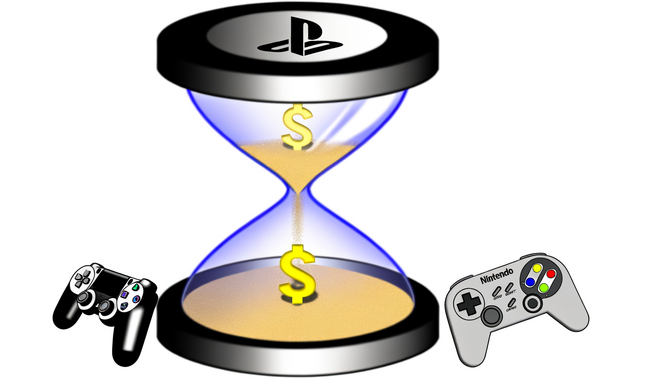
The world of video games is constantly evolving, not just in terms of graphics and gameplay, but also in how we pay for our beloved titles. For years, a relatively stable price point has been the norm for AAA games, but a significant shift is underway. Nintendo, often a trailblazer in the industry, has recently set a new precedent with some of its flagship releases hitting the $80 mark. This bold move isn’t just a Nintendo anomaly; it’s a clear signal, and the timer is now officially set for PlayStation and Xbox to follow suit, albeit with a more nuanced, “split pricing” approach.
Nintendo’s Trailblazing Move
Let’s rewind to the catalysts. Nintendo recently raised eyebrows—and prices—when titles like “Mario Kart World” and the highly anticipated “Switch 2 version of Tears of the Kingdom” arrived with an $80 price tag. For many, this felt like a significant jump from the long-standing $60 or $70 standard. Nintendo, known for its strong first-party titles and often seen as an innovator in pricing models (remember the Wii’s accessible pricing?), is now testing the waters at a higher tier. Their reasoning, though not explicitly detailed for every decision, likely revolves around increased development costs, the perceived value of their top-tier franchises, and a loyal customer base willing to pay for quality.
Xbox’s Attempt and the Backlash
Nintendo wasn’t the only one considering the $80 price point. Xbox, too, dipped its toes into these deeper waters with “The Outer Worlds 2.” Obsidian Entertainment’s highly anticipated sci-fi RPG was initially slated for an $80 release. However, the gaming community’s reaction was swift and vocal. Fan backlash was considerable, leading Xbox to wisely revert to the $70 price point that remains the standard for many AAA games today. This incident served as a crucial lesson: while the industry might be moving towards higher prices, consumer acceptance isn’t a given, and careful implementation is key.
The Current Landscape: $70 as the New Baseline
For a good while, $60 was the magic number for new AAA releases. Then, with the advent of the PlayStation 5 and Xbox Series X/S generation, $70 became the new normal for many of the biggest titles. This increase was often justified by rising development costs, the sheer scale and graphical fidelity of modern games, and the general inflationary pressures impacting all industries. While $70 has largely been accepted, it still represents a significant investment for many gamers. The question now isn’t if prices will change again, but how they will change.
Why Split Pricing Makes Sense
This brings us to the core argument: split pricing. The idea is simple yet revolutionary for the console gaming market. Instead of a blanket price for all new releases, games would be priced according to their scope, scale, development budget, and perceived value. “This price will vary, of course, but it’s a solid step in the right direction.”
Consider the vast spectrum of games released today. On one end, you have monumental, open-world epics developed by hundreds of people over many years, offering hundreds of hours of content. On the other, you have more focused, linear experiences, often with shorter playtimes but still high production values. Should both automatically cost the same?
Split pricing acknowledges this diversity. A smaller, yet critically acclaimed, game might debut at $60, while a sprawling, next-gen blockbuster could command $80 or even more. This isn’t about nickel-and-diming consumers; it’s about aligning price with inherent value and production cost.
How PlayStation and Xbox Could Implement It
For PlayStation and Xbox, adopting a split pricing strategy would require careful consideration and clear communication. Here’s how it might unfold:
1. Tiered Releases:
- Blockbuster Tier ($80+): Reserved for their biggest first-party exclusives, massive open-world games, and titles pushing the boundaries of technology and gameplay. Think the next God of War, Spider-Man, or a new Halo installment. These are games expected to sell millions and define the console’s generation.
- Standard AAA Tier ($70): This would remain the home for many high-quality, big-budget third-party titles and some first-party games that, while excellent, don’t quite hit the “system-seller” status of the blockbuster tier. This would be the most common price point.
- Premium Mid-Tier ($60): For games with strong production values, but perhaps a shorter campaign or a more niche appeal. These could be innovative new IPs, remasters with significant overhauls, or highly polished linear experiences.
- Budget/Indie Tier ($50 or less): This would encompass smaller, yet still high-quality, digital-only releases, indie darlings that get a physical release, or smaller projects from larger studios.
2. Clear Communication:
Both Sony and Microsoft would need to be transparent about their pricing philosophy. Explaining why certain games cost more than others (e.g., “This game pushed the boundaries of what’s possible,” or “This title offers an unparalleled amount of content”) would be crucial in gaining consumer trust and minimizing backlash.
3. Early Access/Deluxe Editions:
These could still exist, offering additional content, early access, or cosmetic items on top of the base game price, further segmenting the market for those willing to pay more.
Benefits for Consumers
While an $80 price tag might initially sting, split pricing ultimately benefits consumers.
- More Choice: Instead of a “one size fits all” approach, gamers would have more options aligned with their budgets and preferences.
- Perceived Value: When a game truly justifies its $80 price through massive scale, innovation, and polish, consumers are more likely to feel they’re getting their money’s worth. Conversely, a well-made but smaller game priced at $60 feels like a fair deal.
- Accessibility: By allowing some high-quality games to remain at lower price points, it keeps more games accessible to a wider audience, preventing the entire industry from shifting to an unsustainable, uniformly high price.
- Clearer Expectations: Gamers would intuitively understand that a $60 game offers a different experience in scope than an $80 game, helping manage expectations and reduce disappointment.
Benefits for Publishers and Developers
For the industry, split pricing offers several advantages:
- Revenue Optimization: Publishers can maximize revenue from their biggest, most expensive-to-produce titles, ensuring they can continue to fund such ambitious projects.
- Fair Compensation: Developers working on smaller, but equally valuable, projects don’t have to artificially inflate their game’s perceived value to meet a fixed AAA price point.
- Innovation: It could encourage more diverse game development. Studios might be less pressured to force every game into a 100-hour open-world mold just to justify a $70 price. A $60 game with a brilliant 15-hour campaign could thrive.
- Market Responsiveness: It allows for greater flexibility in responding to market demands and economic conditions.
Challenges and Considerations
Implementing split pricing isn’t without its hurdles:
- Fan Perception: Overcoming initial skepticism and potential backlash will be key. Trust and transparency are paramount.
- Defining Tiers: Establishing clear, objective criteria for each price tier will be challenging. What makes a game an “$80 title” versus a “$70 title”?
- Consistency: Maintaining consistency across different studios and publishers will be difficult, especially for third-party titles. Will major publishers agree on the same tiering system?
- Market Fragmentation: While offering choice is good, too much complexity could confuse consumers.
- Digital vs. Physical: While digital storefronts offer more flexibility, physical retail channels might require more standardized pricing, creating potential friction.
The Inevitable Future
The reality is that game development costs are soaring. The graphical fidelity, intricate mechanics, and vast worlds that gamers now expect demand ever-increasing budgets and development timelines. Relying solely on a single, fixed price point for all major releases is becoming unsustainable.
Nintendo has effectively broken the ice. While Xbox faced a temporary setback with “The Outer Worlds 2,” the underlying economic pressures and the desire to maximize revenue from blockbuster titles will inevitably push both PlayStation and Xbox towards a more dynamic pricing model. The $70 standard is likely just a waypoint on the journey to more varied pricing.
Conclusion
The timer is indeed set. While the transition may be gradual, and accompanied by understandable consumer apprehension, a future where PlayStation and Xbox adopt a sophisticated split pricing strategy seems increasingly likely. This isn’t just about higher prices; it’s about a more flexible, equitable, and ultimately sustainable model for the industry, ensuring that both monumental blockbusters and innovative gems can find their justified price point. Gamers will be presented with more choice, and the industry can continue to push the boundaries of what’s possible, all while delivering incredible experiences tailored to varying budgets and expectations. The days of one-price-fits-all are slowly, but surely, drawing to a close.


