Introduction
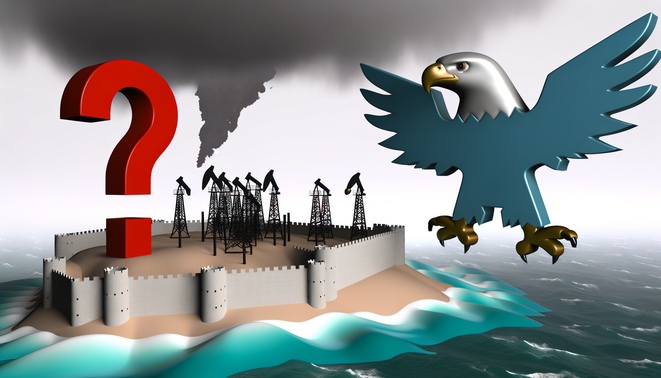
In the complex tapestry of global geopolitics, hypothetical scenarios often serve as crucial thought experiments, allowing us to understand the immense challenges and potential repercussions of extreme actions. One such potent “what if” involves the theoretical possibility of the United States attempting to seize Kharg Island, a small but strategically monumental island off the coast of Iran. Kharg Island is not just another landmass; it is the beating heart of Iran’s oil exports, a crucial lifeline for its economy.
This article aims to explore, purely from an analytical and professional perspective, the colossal strategic, operational, and geopolitical hurdles such a hypothetical military endeavor would face. It is vital to emphasize from the outset that this discussion does not advocate for or suggest the likelihood of such an action. Instead, it serves as an academic exercise to illustrate the profound complexities and potential global instability that would inevitably arise from an operation of this magnitude.
Why Kharg Island? Strategic Significance Beyond Its Size
Kharg Island, situated in the Persian Gulf approximately 25 kilometers (16 miles) off the Iranian coast, is disproportionately significant to Iran’s economic survival. It hosts Iran’s primary oil terminal, handling over 90% of the country’s crude oil exports. For Iran, Kharg Island isn’t merely an asset; it’s an indispensable choke point, a single point of failure whose incapacitation would cripple its ability to generate revenue from oil sales, which form the bedrock of its economy.
From a hypothetical adversary’s perspective, controlling or neutralizing Kharg Island would represent an extraordinary strategic blow, directly impacting Iran’s financial stability and, by extension, its capacity to fund various state activities and regional proxies. Its strategic value thus makes it a theoretical target in any extreme conflict scenario, despite the enormous risks involved in such an undertaking.
The Hypothetical US Objectives: A Costly Gambit
If the United States were to hypothetically consider seizing Kharg Island, its objectives would likely revolve around one or more high-stakes goals:
- Economic Strangulation: To sever Iran’s main oil export artery, thereby applying immense economic pressure far beyond current sanctions.
- Strategic Leverage: To gain a significant bargaining chip in a broader diplomatic or military confrontation, forcing Iran to de-escalate or concede.
- Pre-emptive Action: In a highly unlikely and extreme scenario, to neutralize a perceived immediate threat emanating from Iran that could not be addressed by other means.
However, achieving any of these objectives through military seizure would necessitate a vast, complex, and extraordinarily risky operation with unpredictable global fallout.
Operational Challenges: A Multi-Domain Endeavor of Unprecedented Scale
The seizure of Kharg Island would be a military undertaking of monumental proportions, presenting a myriad of operational challenges across air, sea, and land domains.
1. Achieving Air and Naval Dominance:
Before any ground troops could set foot on Kharg Island, the US would need to establish absolute air superiority over the northern Persian Gulf and air defense suppression capabilities over the Iranian mainland, especially areas bordering the island. This would involve extensive air campaigns to neutralize Iranian air defenses (S-300, S-200, various short-range systems), airfields, and command-and-control centers. Simultaneously, naval dominance would be critical. US carrier strike groups and amphibious ready groups would need to operate with relative freedom in the Persian Gulf, a relatively confined waterway surrounded by potentially hostile shores. Iranian naval assets, including fast attack craft, coastal defense missile batteries (like the C-802/YJ-83), and potentially submarines, would pose significant threats, requiring extensive suppression and interdiction efforts.
2. The Complexity of an Amphibious Assault:
Landing a substantial force on Kharg Island would constitute a classic, albeit incredibly difficult, amphibious assault. This operation would demand meticulous planning and execution:
- Logistics: Moving thousands of troops, heavy equipment (tanks, armored vehicles, artillery), supplies, and support personnel across significant distances.
- Beachhead Establishment: Overcoming coastal defenses, mines, and initial resistance to secure a safe landing zone.
- Sustained Operations: Once on the island, forces would need continuous resupply and reinforcement while facing potential counterattacks.
Iran has fortified Kharg Island with various defenses, including anti-ship missile sites, coastal artillery, air defense systems, and likely a garrison of Revolutionary Guard Corps (IRGC) personnel. Overcoming these entrenched positions would incur significant costs in terms of lives and material.
3. Iranian Counter-Responses:
Iran would undoubtedly unleash a multi-pronged counter-response. This would likely include:
- Missile Attacks: Ballistic and cruise missiles targeting US naval assets, airbases in the region, and potentially allied infrastructure.
- Naval Harassment: IRGC speedboats swarming tactics, mine-laying operations, and possibly limited submarine engagements in the Strait of Hormuz and the wider Gulf, aiming to disrupt shipping.
- Asymmetric Warfare: Potential activation of proxy groups in the region to launch attacks against US interests or allies.
- Escalation: The most significant risk is a rapid and uncontrollable escalation, potentially drawing in other regional and global powers. Iran might close the Strait of Hormuz, a critical global oil transit chokepoint, triggering an international economic crisis.
4. Sustaining the Seizure:
Even if Kharg Island were seized, holding it against determined Iranian counterattacks and managing a long-term occupation would present an ongoing logistical and security nightmare. The island is small and vulnerable to artillery and missile fire from the Iranian mainland, making it a difficult position to defend indefinitely. Maintaining a secure perimeter, defending against asymmetric threats, and ensuring the safety of personnel would be a perpetual challenge.
Geopolitical Fallout: A Cascade of Consequences
The geopolitical ramifications of a US seizure of Kharg Island would be catastrophic, far-reaching, and potentially redefine international relations for decades.
1. International Legal Standing and Legitimacy:
Such an act, without clear international legal justification (like a UN Security Council resolution or undeniable self-defense against an ongoing armed attack), would be widely condemned as an act of aggression. It would severely damage the US’s standing on the world stage, alienate allies, and provide propaganda fodder for adversaries. The legality under international law, particularly the UN Charter, would be highly dubious.
2. Regional Instability and Wider Conflict:
A military seizure would almost certainly plunge the entire Middle East into an unprecedented conflict. Oil prices would skyrocket, global trade routes would be jeopardized, and the security of all nations in the Persian Gulf would be severely compromised. It could ignite a broader regional war, drawing in various non-state actors and potentially impacting global energy security.
3. Global Economic Crisis:
As mentioned, Iran would likely react by attempting to close or disrupt shipping through the Strait of Hormuz, through which approximately 20% of the world’s total petroleum liquids pass. This would trigger a global energy crisis, sending oil prices to unprecedented levels, crippling economies worldwide, and potentially leading to a global recession.
4. Diplomatic Isolation and Alliances:
Many traditional US allies, even those critical of Iran, would likely oppose such a unilateral military action due to its destabilizing nature and violation of international norms. This could lead to a significant fracturing of alliances and a reordering of global power dynamics, with countries potentially distancing themselves from the US.
Beyond Military Action: The Diplomatic and Economic Alternatives
It is critical to remember that in the complex arena of international relations, military options, especially those as extreme as an invasion, are typically considered last resorts, if at all. Diplomatic engagement, robust sanctions, multilateral pressure, and strategic deterrence remain the primary tools for managing international disputes and preventing escalation. The hypothetical scenario of seizing Kharg Island underscores precisely why these non-military avenues, despite their frustrations and challenges, are almost always preferable.
Conclusion: A Highly Improbable Scenario
The hypothetical scenario of the United States attempting to seize Iran’s Kharg Island reveals a military and geopolitical undertaking of truly staggering complexity, risk, and potentially catastrophic consequences. From the immense operational challenges of achieving multi-domain dominance and executing a successful amphibious assault against a determined adversary, to the unfathomable geopolitical fallout including international condemnation, regional war, and a global economic crisis, the costs would be astronomical and the outcomes unpredictable.
This analytical exercise serves to highlight the extraordinary lengths, risks, and moral dilemmas associated with such extreme military actions. It firmly positions the theoretical seizure of Kharg Island as an operation fraught with unparalleled difficulties and global repercussions, underscoring why such an event, in any realistic assessment, remains a highly improbable and deeply undesirable course of action.


