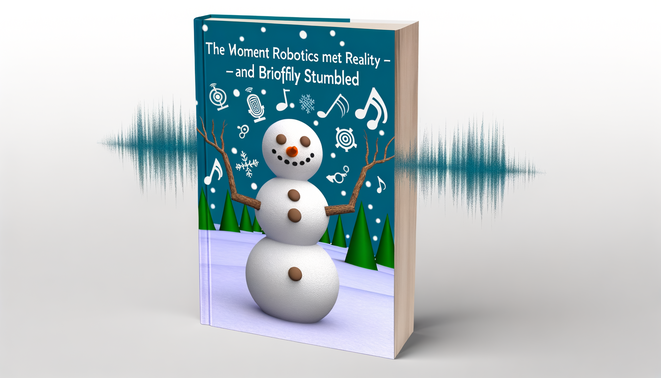
In the enchanting realm of Disney, where cutting-edge technology often intertwines with pure imagination, a recent incident involving a beloved character captured global attention. Picture a crowd of children, their faces aglow with anticipation, gathered around an advanced AI-powered Olaf animatronic, only for the cheerful snowman to unexpectedly “fall down” or cease function right in front of them. The video, encapsulating this blend of technological ambition and unforeseen reality, swiftly went viral. For many, both present and online, this moment of unexpected vulnerability for an advanced robot offered a compelling spectacle that might be the greatest moment ever captured on video, prompting a deeper look into the future of robotics and immersive entertainment.
The Unforgettable Moment Disney’s AI Olaf Took a Tumble
Disney’s AI Olaf, a marvel of modern animatronics, was designed for seamless interaction, bringing the iconic “Frozen” character to life in a dynamic, autonomous way. This initiative reflects Disney’s long-standing commitment to combining storytelling with technological innovation, pushing boundaries to create immersive experiences. Olaf represented the next frontier: a truly autonomous, AI-driven character capable of real-time perception, reaction, and adaptation.
Then, without warning, the magic momentarily faltered. During a performance, Olaf unexpectedly stopped moving and gently, or perhaps more abruptly depending on the perspective, lowered itself or collapsed to the ground. The children present experienced a moment of confused silence, quickly followed by the professional intervention of park cast members. Online, reactions varied from humor to a thoughtful recognition of technology’s inherent fallibility, sparking wider discussions about the implications for artificial intelligence and robotics in public entertainment.
A Glimpse into Tomorrow: The Promise of Disney’s AI Animatronics
Disney’s rich history with animatronics began in the 1960s, revolutionizing theme park experiences. Over decades, this technology evolved dramatically, leading to incredibly lifelike figures. AI Olaf, likely stemming from advanced research initiatives like “Project Kiwi,” signifies a leap toward autonomous characters that can perceive their environment, respond to guests, and adapt performances. This isn’t just about creating realistic robots; it’s about crafting believable, interactive personalities that enhance the magical illusion.
The technology behind AI Olaf is intricate. It incorporates sophisticated sensors for environmental awareness, advanced algorithms for navigation and interaction, complex motor systems for fluid movement, and potentially natural language processing. The goal is to move beyond pre-programmed sequences to truly dynamic, responsive interactions. Such an animatronic is a mobile computing platform operating in a chaotic environment filled with guests, varying light, and obstacles. Achieving seamless operation is a monumental engineering challenge.
Beyond the Glitch: Understanding the Complexities of AI and Robotics
The “fall” of AI Olaf, while striking, highlights the intricate challenges of deploying advanced robotics in public environments. What appears as a “failure” is often a system responding to an anomaly, engaging a safety protocol, or a component reaching its limit.
The Unpredictable World: Robots operate in dynamic environments. A theme park is far from a controlled lab. Unexpected movements, lighting changes, or even minor jostles can trigger system errors. The robot’s sensors must constantly process vast data to maintain balance, navigate, and interact. Any lapse in this loop can lead to unexpected behavior.
The “Uncanny Valley” and High Expectations: Disney sets an incredibly high bar. When a character like Olaf, designed to appear so alive, malfunctions, it’s jarring. We expect perfection from Disney, and any deviation from natural behavior can break the illusion, making the stumble highly noticeable.
Real-Time Processing Demands: For autonomous movement, speech, and interaction, Olaf’s AI must process sensor data, make instantaneous decisions, and execute complex motor commands simultaneously. This requires significant computational power. A software bug, communication delay, or power fluctuation can interrupt this delicate process, causing a system “pause” or “shutdown.”
Physical Wear and Tear: Robotics involves countless moving parts subject to constant stress, friction, and fatigue. Operating for hours daily in a demanding environment inevitably leads to component degradation. Many “falls” are controlled shutdowns designed to prevent further damage or potential injury, prioritizing safety above all else.
A Learning Opportunity: What the Olaf Incident Teaches Us
The AI Olaf incident provides invaluable lessons for AI, robotics, and immersive entertainment.
Firstly, innovation comes with inherent risks. Pioneering technology often involves experimentation and iteration, where not everything goes as planned. These “failures” are not setbacks but crucial data points for refinement. Disney’s willingness to take these risks drives progress.
Secondly, it underscores iterative development. Every glitch offers engineers critical data to diagnose problems, improve algorithms, and enhance hardware design. This continuous cycle of development, testing, and refinement is fundamental to creating robust autonomous systems. It was a live-action debugging session, publicly observed.
Moreover, the incident highlights the enduring necessity of the human element in robotics. While AI aims for autonomy, human oversight, skilled maintenance, and swift professional intervention during unexpected events remain indispensable. The quick response of Disney cast members demonstrated that advanced AI systems require a supportive human infrastructure.
Lastly, it touches upon transparency and trust. How companies handle public technological stumbles impacts public perception. The incident fostered greater public understanding of robotics’ challenges, demystifying the “magic” just enough to appreciate the engineering without breaking the core enchantment.
The Future of Immersive Entertainment: A Stepping Stone, Not a Stumbling Block
The AI Olaf incident isn’t a dead end for advanced animatronics; it’s a stepping stone toward more sophisticated and reliable immersive experiences. It reminds us that deploying AI and robotics in complex human environments is an ongoing process of learning and adaptation.
Future iterations of AI characters will likely feature more robust self-diagnosis capabilities, proactively identifying issues before public incidents. Power systems will become more efficient, and mechanical components more resilient. AI algorithms will continue to improve, enabling nuanced social interactions and better navigation through crowds, reducing unexpected behavior.
The role of AI in personalizing theme park experiences will grow. Imagine characters remembering your name or preferences, creating unique moments. This personalization, while requiring advanced AI, also brings ethical considerations for data privacy, which Disney will navigate thoughtfully.
The quest for seamless magic is ongoing. The dream of perfectly integrated, autonomous AI characters remains a powerful driving force for engineers. Every “tumble” like Olaf’s provides critical data, pushing the boundaries of what’s possible in entertainment technology.
Conclusion: The Enduring Magic of Innovation
The sight of Disney’s AI Olaf unexpectedly falling was striking. More than a viral moment, it was a profound illustration of where cutting-edge AI and robotics meet the tangible, often unpredictable, realities of our world. It might have been a stumble, but it was also a visible testament to the incredible efforts to bring beloved characters to life in new ways.
Technology, especially at its bleeding edge, is rarely flawless from inception. It evolves through trial, error, and persistent iteration. Disney’s commitment to pushing these technological boundaries, even with public glitches, reaffirms its role as a pioneer. The magic isn’t just in the flawless illusion; it’s also in the relentless pursuit of making the impossible possible, one complex robotic character at a time. The AI Olaf incident reminds us that the journey of innovation is filled with memorable moments, both enchanting and imperfect, all contributing to the enduring wonder of tomorrow’s entertainment.


