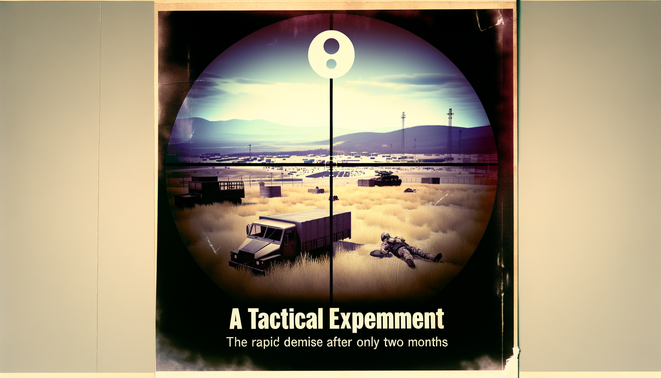
PUBG: Blindspot Shuts Down After Only Two Months – The Rapid Demise of a Tactical Experiment
The world of gaming is often a rollercoaster of exciting announcements, groundbreaking releases, and sometimes, unexpected goodbyes. For fans of the colossal PUBG universe, a recent development has sent a ripple of surprise: PUBG: Blindspot, the ambitious top-down tactical shooter, has officially announced its closure. What makes this news particularly striking is the brevity of its existence. After launching in early access with much anticipation, Blindspot is shutting down after only two short months, never even making it out of its developmental phase. This swift departure leaves many questions about its fate, the challenges of game development, and what this means for the ever-evolving PUBG franchise.
What Was PUBG: Blindspot? A Brief Look at the Tactical Spin-Off
For those who might have missed its brief tenure, PUBG: Blindspot was an interesting foray into a different genre within the established PUBG universe. Unlike the iconic battle royale experience that thrust players into a sprawling map with 100 competitors, Blindspot took a unique top-down tactical shooter approach. Imagine a bird’s-eye view, focusing intensely on strategic positioning, cover mechanics, and precise gunplay, all wrapped in a more intimate, squad-based combat scenario. It promised a fresh perspective, blending the familiar tension and gun mechanics of PUBG with a different tactical layer. The game aimed to cater to players who enjoyed a more deliberate, strategic pace, offering a stark contrast to the often chaotic, fast-paced nature of traditional battle royale. It was an experiment, a venture into diversifying the PUBG brand, and initially, it held significant promise for a niche audience looking for something new.
The Rise and Rapid Fall: A Two-Month Saga in Early Access
PUBG: Blindspot emerged into the early access scene just a couple of months ago, inviting players to dive in and help shape its development. Early access, for those unfamiliar, is a common practice in modern game development where unfinished versions of games are released to the public. Players can purchase and play these games, providing feedback that developers use to refine and improve the product before its official “1.0” launch. It’s a collaborative process, often yielding great results. However, for Blindspot, this collaborative journey was cut remarkably short. Despite the initial buzz and the inherent appeal of a new PUBG title, the announcement of its imminent shutdown arrived with unexpected speed. To never even transition beyond the early access phase within such a condensed timeframe is a rare and stark reminder of the volatile nature of the gaming industry. It signifies that something fundamental wasn’t aligning, leading its creators to make the difficult decision to pull the plug before it could fully bloom.
Why the Early Demise? Unpacking the Reasons Behind the Shutdown
When a game with a recognizable brand name like PUBG fails to gain traction and shuts down so quickly, the community naturally seeks answers. While the official statements often remain brief, several factors typically contribute to such an early demise. One primary suspect is player engagement. Even with a famous name, if the gameplay loop doesn’t captivate enough players, or if the concurrent player count remains too low, it becomes unsustainable. A small player base means longer matchmaking times, fewer active communities, and ultimately, a feeling of emptiness.
Another critical factor could be market saturation and competition. The tactical shooter genre, even top-down variants, is fiercely competitive. Distinguishing oneself from established titles requires a truly innovative hook and flawless execution. Perhaps Blindspot struggled to carve out its unique identity or didn’t offer enough compelling reasons for players to switch from their current preferred games.
Resource allocation might also have played a role. Developing and maintaining a game, especially one in early access, requires significant financial and human resources. If the development team or publisher (Krafton, in this case) saw a clear path where these resources could be better utilized on other, more promising projects within their portfolio, making a decisive cut, even early on, makes strategic business sense.
Finally, player feedback and overall reception during the early access period are paramount. While the game was still in its formative stages, if the feedback indicated widespread technical issues, core gameplay flaws that were too difficult to fix, or a fundamental misunderstanding of what players wanted from a tactical PUBG experience, these insights could have sealed its fate. Sometimes, a concept, however promising on paper, simply doesn’t translate well into a playable, enjoyable game for a broad enough audience.
Impact on Players and the Early Access Model: Risks and Expectations
The closure of PUBG: Blindspot undoubtedly brings disappointment to those who invested their time and, for some, their money into the early access version. While the early access model offers players a chance to influence development and get a sneak peek, it inherently carries risks. Games can change drastically, be delayed indefinitely, or, as in Blindspot‘s case, be canceled outright. For players, this serves as a reminder to approach early access titles with tempered expectations. Publishers usually have refund policies in place for early access games that cease operations, and players who purchased Blindspot should look into those options. Beyond refunds, the impact lies in the dashed hopes for a new, engaging tactical experience within the PUBG world. It also raises questions about the future of experimental spin-offs from large franchises – how much risk are developers willing to take, and how will players perceive these ventures going forward?
Lessons Learned for Developers and Players from Blindspot’s Short Life
The story of PUBG: Blindspot‘s brief existence offers valuable lessons for both game developers and the gaming community.
For developers and publishers, it underscores the critical importance of rigorous market research and a crystal-clear understanding of their target audience. A unique selling proposition isn’t enough; it must resonate deeply with players. Listening to community feedback, especially during early access, isn’t just a courtesy—it’s a necessity for survival. Furthermore, the sustainability of a project relies heavily on a solid business model and the ability to pivot or cut losses when necessary. It highlights that even a globally recognized brand like PUBG doesn’t guarantee success for every spin-off if the core product isn’t compelling enough or if the market isn’t receptive.
For **players**, Blindspot‘s shutdown reinforces the inherent risks and rewards of engaging with early access titles. While supporting games in development can be incredibly fulfilling, it’s crucial to remember that these are unfinished products. There’s no guarantee of a full release, or that the final game will align with initial expectations. It encourages a discerning approach, valuing transparency from developers and making informed decisions about where to invest time and money.
The Future of PUBG: Moving Forward Beyond Blindspot
Despite this setback, it’s important to remember that the broader PUBG franchise remains a titan in the gaming world. The original PUBG: Battlegrounds continues to thrive, evolving with new maps, features, and competitive seasons. PUBG Mobile maintains its massive global presence, consistently ranking as one of the most played mobile games. Even PUBG: New State Mobile offers a futuristic take on the battle royale genre, successfully expanding the universe. The closure of Blindspot is not an indictment of the entire franchise but rather a testament to the experimental nature of the industry. It shows that even successful companies are willing to try new things, and sometimes, those experiments don’t pan out. This kind of calculated risk-taking, even with its failures, often paves the way for future innovations and successes in other areas. The PUBG universe is vast and resilient, and this particular chapter merely closes one door while many others remain wide open.
Conclusion: A Swift Goodbye and Lasting Lessons
The rapid closure of PUBG: Blindspot after only two months in early access serves as a potent reminder of the demanding and unpredictable landscape of video game development. While its journey was short, it offered a glimpse into an alternative tactical vision for the PUBG world. For players, it’s a moment of reflection on the early access model and the bittersweet experience of unfinished games. For developers, it’s a lesson in strategy, market fit, and resource management. Though Blindspot never made it past its initial stages, the larger PUBG saga continues stronger than ever, proving that even a stumble can be a stepping stone towards a more focused and innovative future. The gaming world moves fast, and while we bid farewell to Blindspot, the anticipation for what comes next from the PUBG creators remains as high as ever.


