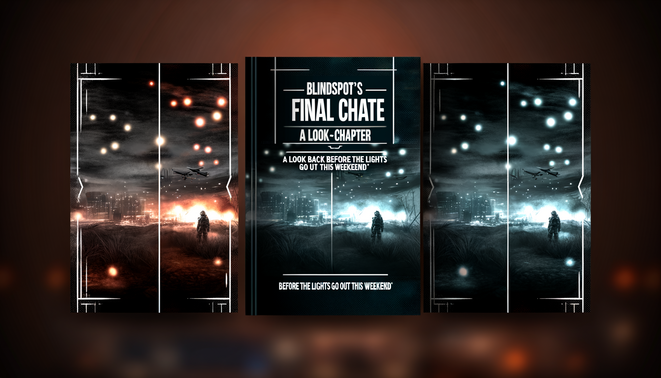
PUBG: Blindspot’s Final Chapter – A Look Back Before the Lights Go Out This Weekend
The world of online gaming is a vibrant, ever-evolving landscape where new titles emerge with ambitious promises, and others fade away. Yet, few stories unfold with the speed and finality of PUBG: Blindspot. Less than two months after making its debut in early access on Steam, this unique top-down battle royale spin-off of the globally acclaimed PUBG franchise is preparing for its final curtain call. If you’ve been curious about its distinct take on the genre, or simply want to witness a piece of gaming history, this weekend marks your absolute last chance to jump into the fray before PUBG: Blindspot shuts down forever.
This swift departure leaves many players and industry observers pondering: what happened? How could a game associated with one of the biggest names in battle royale come and go so quickly? Let’s delve into what PUBG: Blindspot offered, explore the potential reasons behind its rapid closure, and reflect on the broader implications for game development and the highly competitive online gaming market.
What Was PUBG: Blindspot? A Fresh Perspective on Battle Royale
For millions, PUBG is synonymous with the heart-pounding, last-man-standing action of a sprawling battle royale played from a traditional third or first-person perspective. PUBG: Blindspot, however, dared to reimagine this formula entirely. It took the core tenets of the PUBG universe – strategic looting, shrinking safe zones, diverse weaponry, and intense player-versus-player combat – and transplanted them into a distinctive top-down perspective.
Imagine the tension of PUBG, but with a bird’s-eye view, similar to classic arcade shooters or modern twin-stick games. This shift fundamentally altered the gameplay experience. Instead of peeking around corners with a direct line of sight, players relied more heavily on map awareness, sound cues, environmental cover, and tactical positioning. The “blindspot” in its name wasn’t just a clever title; it alluded to the new challenges and opportunities presented by this perspective. Players had to anticipate enemy movements, utilize the terrain to their advantage, and make quick decisions based on limited visual information, creating a unique layer of strategy that set it apart from its genre brethren.
It was an intriguing premise, offering both veterans of the PUBG franchise and newcomers to battle royale a fresh way to engage with the genre. The potential for innovative tactics, careful resource management, and precise execution in a top-down format seemed promising, aiming to carve out its own niche within the crowded gaming market.
The Brief Journey Through Early Access: Hopes and Realities
When PUBG: Blindspot launched into early access on Steam, it carried the inherent promise of this development model: an opportunity for players to get involved early, provide feedback, and help shape the game’s evolution alongside its developers. Early access is often a testing ground, a period of iterative improvements and community building. For some games, it’s a springboard to massive success; for others, it can be a proving ground that highlights insurmountable challenges.
The swiftness of Blindspot’s shutdown suggests that its early access journey was significantly shorter and perhaps more challenging than anticipated. While the exact reasons for the closure haven’t been fully detailed, several factors commonly contribute to a game’s early demise in the intensely competitive online gaming landscape:
- Player Engagement and Retention: Even with the PUBG brand, attracting and, more importantly, *retaining* a dedicated player base in a saturated market is incredibly difficult. If initial player numbers were low or dropped off quickly, it becomes challenging to sustain development.
- Market Niche vs. Mass Appeal: While the top-down perspective offered uniqueness, it might have struggled to bridge the gap between niche appeal and the broader audience that a battle royale game needs to thrive. Players accustomed to the traditional PUBG experience might have found the top-down mechanics too different, while fans of top-down shooters might not have been drawn to the battle royale format.
- Development Resources and Viability: Running and developing an online multiplayer game requires significant resources. If the game wasn’t meeting internal performance metrics or showing a clear path to profitability, developers might have made the difficult decision to reallocate resources elsewhere.
- Competition: The battle royale genre is dominated by giants like the original PUBG, Fortnite, Apex Legends, and Call of Duty: Warzone. Standing out and building a community against such titans requires sustained innovation, aggressive marketing, and a flawless execution, which can be an uphill battle for any new entrant, let alone a spin-off.
Regardless of the specific confluence of these factors, the decision to pull the plug so soon indicates that the vision for PUBG: Blindspot, despite its creative premise, simply wasn’t viable in the long term.
Your Last Chance: Why Play PUBG: Blindspot This Weekend?
With the shutdown looming, the question for many might be: why bother playing a game that’s about to disappear? The answer lies in the unique opportunity this weekend presents.
- Experience a Unique Twist: This is your final opportunity to dive into a battle royale experience unlike almost any other. Witness firsthand how the top-down perspective transforms familiar PUBG mechanics into something fresh and challenging.
- A Glimpse into Gaming History: Games that shut down quickly often become footnotes, but experiencing them before they vanish offers a unique perspective on the dynamic nature of game development and market trends. It’s a chance to play a “what if” scenario and understand why certain risks sometimes don’t pay off.
- Pure Curiosity and Fun: If you enjoy exploring different game concepts or simply have a few hours to spare, jumping into PUBG: Blindspot for its final hurrah could be a surprisingly enjoyable way to spend your weekend. There’s a certain thrill in participating in a game’s last moments, sharing a unique experience with others who are also saying goodbye.
Downloading and playing PUBG: Blindspot this weekend isn’t just about entertainment; it’s about acknowledging a creative effort, understanding the challenges of the gaming industry, and perhaps finding a new appreciation for the games that manage to endure and thrive.
The Broader Impact: Lessons for the Gaming Ecosystem
While the closure of PUBG: Blindspot is undoubtedly disappointing for its developers and any nascent player community, it also offers valuable lessons for the broader gaming ecosystem:
- The Volatility of Online Multiplayer: This event underscores the inherent risks and rapid shifts within the online multiplayer space. Player tastes change, competition intensifies, and even well-backed projects can struggle to find a foothold.
- The Power of the Core Brand: While being associated with PUBG provides instant recognition, it also sets a high bar for expectations. Spin-offs need to not only leverage the brand but also innovate sufficiently to justify their existence and attract a dedicated audience of their own.
- Early Access as a Double-Edged Sword: Early access can be a fantastic tool for iterative development and community engagement. However, it also exposes a game to public scrutiny at its most vulnerable stage. A slow start or a failure to quickly address issues can prove fatal.
Importantly, the shutdown of PUBG: Blindspot does not signal any trouble for the main PUBG: Battlegrounds game, which continues to be a dominant force in the battle royale genre. This is a targeted decision regarding a specific spin-off that, for various reasons, didn’t find its footing.
Looking Ahead: Beyond the Blindspot
The gaming industry is characterized by constant innovation and fierce competition. For every game that shutters, many more are being developed, pushing boundaries and offering new experiences. The story of PUBG: Blindspot, while brief, is a reminder that even the most promising concepts require meticulous execution, effective marketing, and a deep understanding of player desires to succeed.
For players, it’s a call to appreciate the games we have and perhaps to give unique, experimental titles a chance, even if their lifespan is uncertain. Every game, whether it lasts for years or mere weeks, contributes to the rich tapestry of gaming history.
Conclusion: A Final Salute to PUBG: Blindspot
PUBG: Blindspot’s journey has been remarkably short, but its existence as a bold experiment in the battle royale genre shouldn’t be overlooked. This weekend marks the definitive end of its early access phase and its presence on Steam. It’s a moment to reflect on the challenges of game development, the cutthroat nature of the gaming market, and the bravery of teams attempting to innovate within established franchises.
If the idea of a top-down PUBG intrigued you, or if you simply want to experience a game before it becomes a part of digital history, now is your last chance. Dive in, explore its unique mechanics, and give PUBG: Blindspot a final, fitting farewell. Who knows, you might just discover a hidden gem for a fleeting moment, before the lights go out for good.


