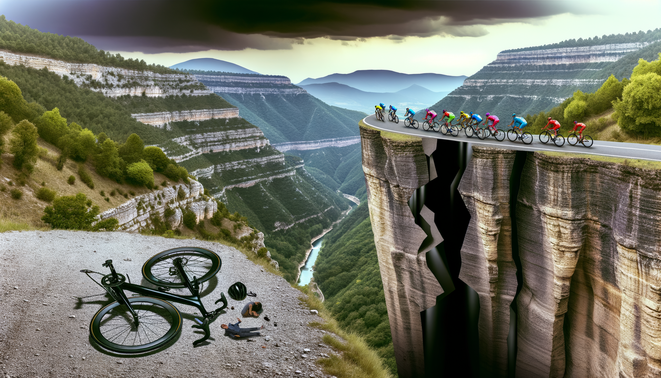
The world of professional cycling is a thrilling spectacle of speed, endurance, and strategic prowess. Yet, beneath the glamour of triumphant finishes and breathtaking landscapes lies an ever-present element of danger. This stark reality was brutally highlighted during the recent Volta a Catalunya, when one of its brightest stars, Tom Pidcock, endured what has been described as a “horror” fall down a ravine. The incident sent shockwaves through the peloton and among fans, underscoring the extreme risks riders face in pursuit of victory. For beginners and seasoned enthusiasts alike, Pidcock’s crash serves as a powerful reminder of the fine line between glory and peril in the demanding sport of cycling.
The Incident Unfolds
The Volta a Catalunya, a prestigious multi-stage race set against the stunning backdrop of Spain’s diverse terrain, was in full swing, drawing top talent from across the globe. Stage 3, a grueling 176.7-kilometer journey from Sant Joan de les Abadesses to the summit finish of Port Ainé (Pallars Sobirà), was particularly challenging. It featured significant climbs and equally demanding descents that test even the most skilled riders’ bike-handling abilities and courage. It was on one such perilous descent, specifically around the time trials where speeds are exceptionally high, that disaster struck for Tom Pidcock, the versatile British talent from Ineos Grenadiers. Accounts from witnesses and his team describe a horrifying moment of lost control, leading to Pidcock veering sharply off the asphalt and tumbling precipitously into a ravine. This wasn’t a mere roadside tumble onto grass; the severity of falling into a gully, often steep, rocky, and unforgiving, immediately sparked grave concerns for his well-being. The visual of a rider disappearing from view, into an abyss beyond the sight of the road, is one that haunts the memory of any cycling fan and highlights the extreme consequences of even a minor error at speed. The immediate response from race organizers and his team was crucial, swiftly deploying medical personnel to assess the situation and provide urgent assistance, showcasing the critical role of rapid emergency protocols.
Immediate Aftermath and Diagnosis
The scene was one of heightened tension as rescue efforts commenced to extract Pidcock from the challenging terrain of the ravine. Thankfully, initial reports confirmed that Pidcock, though clearly shaken and injured, was conscious and able to communicate with the medical staff. After being carefully retrieved, he was immediately transported to a nearby hospital for a thorough examination. The diagnosis revealed a concussion, a serious head injury requiring careful management, along with facial trauma and various abrasions consistent with a high-speed fall onto rough surfaces. Crucially, and to the immense relief of everyone involved, there were no reports of major fractures or life-threatening internal injuries. While a concussion is a significant concern that demands a cautious and monitored recovery period, the cycling world breathed a collective sigh of relief that the outcome wasn’t far worse, given the sheer drop and the harsh environment of the fall. His withdrawal from the Volta a Catalunya was immediate and non-negotiable, a standard protocol prioritizing his health and long-term well-being above all else. This decisive action, though disappointing for fans and his team who had high hopes for his performance, underscored the professional approach to rider welfare in modern cycling.
The Inherent Risks of Professional Cycling
Pidcock’s “horror” fall serves as a stark and visceral illustration of the inherent dangers embedded within the sport of professional road racing. Riders routinely navigate narrow, winding roads, often at exhilarating speeds exceeding 80 km/h on descents, mere inches from their competitors, while grappling with unpredictable weather conditions and challenging technical courses. Crashes are, unfortunately, an all too common occurrence in the peloton, ranging from minor tumbles that result in superficial scrapes to devastating pile-ups involving multiple riders and leading to severe injuries. However, a fall into a ravine introduces an additional, terrifying dimension that goes beyond the typical road incident. It dramatically underscores the unforgiving nature of the terrain that often borders race routes and the extremely limited margin for error that exists in such high-stakes environments. Even a slight misjudgment, a momentary lapse of concentration, or an unexpected patch of gravel can lead to catastrophic consequences. Race organizers, in collaboration with rider associations and teams, continually strive to enhance safety measures. These efforts include clearer route markings, strategic placement of protective barriers, detailed reconnaissance of dangerous sections, and improved emergency response protocols. Yet, the very essence of the sport – pushing human and mechanical limits against gravity and terrain – means that an element of inherent risk can never be entirely eliminated. Riders like Pidcock consciously accept these risks as an integral part of their profession, driven by an unparalleled passion for competition and the relentless pursuit of victory. Nevertheless, every serious incident like this forces a critical re-evaluation of what can be done to further protect these extraordinary athletes.
Pidcock’s Resilience and Path Forward
Tom Pidcock is known not just for his incredible talent across multiple cycling disciplines – being a reigning Olympic mountain bike champion, a former cyclocross world champion, and a formidable force on the road – but also for his fierce determination and remarkable resilience. He’s a rider who has consistently demonstrated an ability to bounce back from setbacks. While a concussion necessitates a careful, graduated return-to-play protocol that cannot be rushed, Pidcock’s history suggests he will approach his recovery with the same tenacity and discipline he exhibits in races. The immediate focus for Pidcock will be on complete rest, rigorous monitoring for any lingering symptoms, and undergoing a series of medical evaluations to ensure full neurological recovery before even considering getting back on the bike. His team, Ineos Grenadiers, one of the most professionally managed outfits in the sport, will provide comprehensive support, ensuring he has access to the best medical care, rehabilitation specialists, and mental health resources. For a rider with such ambitious goals for the season, including potentially aiming for Grand Tours, major Classics, or defending his Olympic title, this setback is undoubtedly frustrating and disruptive. However, his youth, exceptional physical condition, and strong mental fortitude are significant advantages in his recovery journey. The global cycling community will be eagerly awaiting updates on his progress, collectively hopeful for his swift and complete return to the top echelons of the sport, where he undoubtedly belongs.
Team Ineos Grenadiers and the Race Impact
The withdrawal of a key rider like Tom Pidcock is always a significant blow to a team’s strategic ambitions and overall morale within a stage race. Ineos Grenadiers, renowned for its deep roster of talent and meticulous planning, undoubtedly had Pidcock earmarked for specific roles or even overall contention in the Volta a Catalunya. While his exit undeniably forced a recalibration of their race tactics, the immediate priority, as publicly stated by the team, was unequivocally Pidcock’s health and well-being. The team’s statements emphasized their relief at his relatively stable condition, even amidst the disappointment of losing such a strong contender. The race continued, of course, with other riders stepping up to fill the void, demonstrating the collective strength of a professional cycling squad. However, the incident served as a stark reminder of the fragile nature of success and the profound human element that underpins elite competition.
Looking Ahead: Safety, Recovery, and the Unbreakable Spirit of Cycling
This alarming incident, while highlighting the dangers, also prompts important discussions about rider safety in professional cycling. As the sport continues to evolve, so too must the efforts to protect its most valuable assets – the athletes. From advancements in helmet technology and protective gear to improved course design, clearer signage, and enhanced emergency response protocols, every measure counts in mitigating risk. Yet, at its heart, professional cycling remains a sport of daring, courage, and immense human spirit. Pidcock’s “horror” fall is a powerful testament to the inherent risks, but also to the unwavering resilience of those who choose to race. It reminds us of the human stories behind the headlines, the bravery of the riders, and the dedication of the teams and medical staff who tirelessly ensure their welfare. We wish Tom Pidcock a full and speedy recovery, eagerly anticipating his return to the peloton, where he will undoubtedly continue to conquer mountains and challenge limits once again.


